

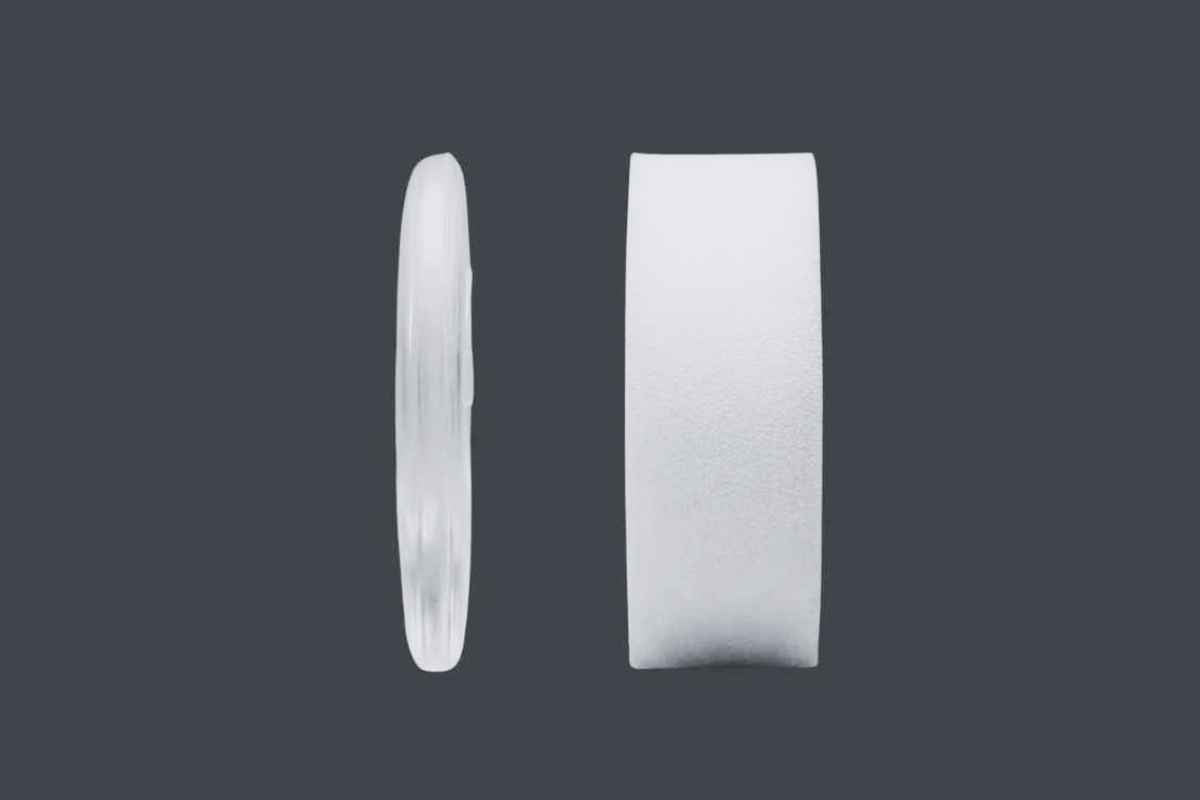
Foam vs Silicone Knee Pads for Figure Skaters: Which One Actually Protects You
Most skaters training knee slides right now are wearing knee pads that have already stopped protecting them properly. Not because the pads broke. Not because they look worn out. Because of how foam works on the inside, and most skaters have never been told.
This guide breaks down foam and silicone knee pads for figure skaters, what each material actually does on impact, and how to choose the right figure skating knee protection for how you actually train.
Falling has always been part of skating, and the most common places to fall are the hip and the tailbone, not the knee. That is also why knee protection was never really talked about the way hip and tailbone protection was. But figure skating has changed. Knee slides and low choreography, kneeling into the ice for extended stretches, are now close to standard practice, and they happen far more often in a single session than an actual fall does. That means skaters now need to think about two different kinds of protection, not one. There is still the occasional hard fall, and there is now also the sustained, repeated kneeling that most sessions actually involve. This guide looks at both, and at what each material is actually built for.
What Foam Actually Does When You Kneel On It
Foam works because it is full of tiny air pockets. When your knee presses down, those pockets get squeezed and the air inside them gets pushed out or compressed. That squeezing is what absorbs the force before it reaches your knee.
There are two main types used in padding:

Open cell foam. The air pockets connect to each other, like a sponge. Air can move freely between them. This makes the foam feel soft and flexible, but it also means it soaks up sweat and moisture the same way a sponge does.
Closed cell foam. Each air pocket is sealed off on its own, like individual tiny balloons packed together. This makes the foam firmer than open cell foam, but it still works the same basic way: pockets compress, then try to spring back.
That word, try, matters.
Why Foam Pads Go Flat Without Ever Looking Different
Every time an air pocket gets compressed, it is supposed to bounce back to its original shape. The technical term for when it stops doing that is compression set.
Compression set happens gradually. Compress the same pockets in the same spot enough times, over enough training sessions, and they stop fully recovering. The foam quietly gets thinner and less responsive in exactly the area that matters most, the spot your knee actually needs protection.
This is the part most skaters never learn: a foam knee pad can look completely fine from the outside while offering a fraction of the protection it did when new. There is no visible sign. You cannot tell by looking at it or even by touching it. You only find out the hard way, when the bruise shows up anyway.

For a sport where knee slides and low choreography now happen far more often per session than an actual fall does, this is not a small detail. It is the single biggest reason a knee pad that worked at the start of the season might be doing almost nothing by December.
What Solid Silicone Does Differently
Solid silicone has no air pockets at all. There is nothing inside it to compress and nothing that can fail to bounce back, because there is nothing hollow to begin with.
Instead, solid silicone absorbs impact through its own elasticity. The material itself stretches and flexes under pressure, then returns to its original shape because that is simply how the material behaves, not because air is refilling empty pockets.
This is the real, practical difference: foam's protection depends on a physical structure that wears out with use. Solid silicone's protection depends on a property of the material itself, which does not degrade the same way through repeated compression.
The sliding motion itself adds another layer most skaters never think about. A knee slide is not just downward pressure, it is downward pressure combined with a lateral, sliding force. Foam pads are generally built and tested around straight compression, not repeated sliding friction across their surface. Over time, that sliding motion can accelerate how quickly the padding underneath loses its shape, on top of the compression set already happening from pressure alone. Solid silicone is not relying on an internal structure that sliding friction can disrupt, so it holds its shape through that motion in a way foam is not built to.
There is a real cost to this difference too. Competitive players in similarly high frequency sports, like volleyball, often find their foam knee pads need replacing every three to four months once they're training multiple sessions a week, sometimes sooner depending on intensity. For a sport where the gear budget already goes toward boots and blades, replacing knee protection every few months adds up fast. Solid silicone is not on the same replacement clock, because it is not wearing out through the same mechanism in the first place.
Knee Slides Are Not the Same Kind of Impact as a Hard Fall
Here is the part that actually decides which material you need: it is not really foam versus silicone. It is what kind of impact your knee is dealing with.
Low impact, sustained contact. This is a knee slide. It is kneeling on the ice for an extended stretch during choreography. The height is low, the pressure is not a single sharp shock, but it happens over and over, session after session.
High impact, single moment contact. This is a hard fall. Missing a jump you're still learning, catching an edge wrong, an unexpected slip. The knee meets the ice from real height, once, suddenly, with a lot of force behind it.
For most figure skaters training regularly, low impact is the far more frequent one. Knee slides and low choreography happen many times in a single session. A hard fall onto the knee specifically is comparatively rare, even though falling in general is a normal part of learning to skate.
These are genuinely different problems for padding to solve, and it is worth being simple and honest about what research actually shows here.
A study that tested real knee impacts found something researchers did not expect going in. A knee pad did not simply cushion a hard hit the way people assume. It acted more like a spring: it briefly held onto some of the impact energy before releasing it, rather than just soaking it up. And the harder the fall, the less that effect helped. In plain terms, padding takes some of the sting out of a hard fall, but no pad, in any material, makes a hard fall harmless. That is true for foam and for silicone alike.
Here's how the two compare across what actually matters for figure skating:
| Foam | Solid silicone | |
|---|---|---|
| Best suited for | An occasional hard fall | Frequent knee slides and low choreography |
| Durability with repeated use | Compresses and loses shape over time | Holds its shape session after session |
| Typical replacement | Every few months with frequent training | Not on the same replacement cycle |
| Profile needed for real protection | Thicker, to absorb more force | Can stay slim |
| Deep knee bend and flexibility | Restricted by thickness | Moves with a full range of motion |
| Practical for wearing all session | Usually taken on and off for specific drills | Can be worn the entire session |
Why Edge Chose Solid Silicone
Before Edge existed, the search for decent knee protection went through the usual options: dance pads, volleyball pads, generic foam. All of them ran into the same problem. Foam needs enough thickness to actually absorb real force, and that thickness got in the way. It didn't move well with a deep knee bend. It shifted out of place during spins and slides instead of staying put. And even when it was comfortable at first, it broke down fast under repeated use, which is exactly what figure skating asks of a knee pad.
Solid silicone solved both sides of that problem. It doesn't rely on air pockets that need to compress, so it isn't bulky to begin with, which means it stays out of the way, moves with a full knee bend, and doesn't restrict the tight, controlled positions skating requires. And because there's nothing inside it to compress and wear out, it holds its shape and its protection through repeated slides, session after session, instead of quietly losing effectiveness the way foam does.
The moisture from ice adds to this. A knee sliding across the ice generates enough friction to melt a thin layer right at the contact point, which means the pad is genuinely getting wet, slide after slide, session after session. That kind of repeated moisture is part of what breaks foam down fastest. Solid silicone isn't affected by it the same way, which matters over a full season of training, not just one session.

Put together, this is why Edge Gel Knee Guards use solid silicone: it's the material that actually matches how figure skaters train, far more often than not.
See the Edge Gel Knee Guards here.
When Foam Still Has a Place
Silicone is the better everyday choice for figure skating, because knee slides and low choreography now happen far more often per session than an actual hard fall on the knee. But if you are working on a specific skill with real fall risk, like a new jump you know you're still likely to come down wrong on, and your regular protection doesn't feel like enough for that, it's worth wearing a thicker foam pad over your gel knee guards for that specific drill. The extra padding adds a layer of reassurance and takes a bit more of the impact than the guards alone, which matters both physically and mentally when you're throwing yourself into something new.
The tradeoff is that thick foam restricts a deep knee bend, and figure skating depends on that range of motion constantly. That's exactly why it shouldn't be something you wear all session. Look for a foam pad you can easily strap on and take off, so you can add it right before that specific element and remove it again once you've moved on to everything else.
The rule that matters most is that your knee should be protected the entire time you're on the ice, not just when you remember to think about it. That's exactly where solid silicone works best: it's thin enough to forget you're wearing it, so you're always protected without having to take anything on or off between elements. Save the added foam layer for the specific moments that call for it.
Quick Answers
What knee guards do figure skaters actually need?
Most figure skaters need protection built for sustained, repeated, low height contact, not only hard fall protection. That means a slim, durable material that holds its shape through knee slides and low choreography, session after session. Solid silicone is built for exactly that. Bulky, thick foam pads are built for a different job, occasional hard impact, and are not practical to wear through a full session.
What is the best knee protection for figure skating, foam or silicone?
For daily training, solid silicone is the better fit for figure skating specifically, because it stays slim, moves through a full knee bend, and holds up to repeated slides without breaking down. Foam still has a role for specific high fall risk drills, worn as an added layer over your regular knee protection, not as a daily replacement for it.
Do adult figure skaters need different knee pads than kids?
The core need is the same for adults and kids: slim, secure, durable protection that stays in place. Sizing is the main difference, since fit affects how well any knee pad stays put and protects the right contact area.
Are knee support sleeves the same as knee guards for skating?
No. Knee support sleeves are generally built for joint compression and stability, not impact protection. Figure skating knee guards need to actively absorb and hold up against repeated ice contact, which a compression sleeve alone is not designed to do.
Can I use volleyball knee pads for figure skating?
Volleyball knee pads are usually foam based and built for hardwood floors, not the sliding, moisture, and repeated contact of ice. They can work, but they were not ideal for skating specifically and tend to wear out faster under those conditions.
Does thicker always mean more protection?
Not necessarily. Thickness matters more for foam, because its protection depends on how much material there is to compress. Solid silicone does not follow the same rule, which is part of why it can stay slim while still protecting against sustained contact.
Can I tell when my foam knee pad has worn out?
Usually not by looking at it. Compression set happens gradually and often without any visible change. If your pad is more than a season old and you are bruising in the same spot you did not used to, the padding underneath may no longer be doing much.
Is silicone better than foam?
It comes down to what your knee actually needs protection from most. Your knee should be protected the entire time you're training, and solid silicone is the material that lets you do that without getting in your way or distracting you from your skating. If you're working on a specific element where fear of falling or an already bruised area means you want extra reassurance, adding a foam layer over your regular guards for that element is the right call. For everyday training, solid silicone is the better choice for a figure skater.
Do knee guards protect against every fall?
No knee pad, in any material, eliminates the force of a hard fall. Padding reduces impact, it does not remove it. Whether foam or solid silicone, that impact is always there in some form, what differs is how it feels and how the material holds up over time. Edge Gel Knee Guards, made from solid silicone, are there for that same honest reason: to support you through the sustained contact of knee slides and low choreography, every session, without pretending any pad makes a hard fall disappear.
Sources referenced: compression set behavior in foam materials (Gaska Tape, Stockwell Elastomerics), open cell vs closed cell foam structure (Ariaprene, Phelps Industrial), knee pad drop test mechanics (Nature Scientific Reports, 2019), ice friction and frictional melting (physics review, University of Amsterdam), knee pad design constraints in figure skating (US patent literature on figure skating knee pad design), foam knee pad replacement frequency in high frequency training sports (volleyball equipment guidance).