
Why Figure Skating Allows Knee Slides and Backflips Now, and What It Means for Protection
Backflips, cartwheels, handstands, knee slides. None of this was standard in figure skating a decade ago. Now it's close to expected. The rules changed on purpose, and the reasoning behind that change is worth understanding, because it has real implications for how skaters need to protect their bodies.
Boots and blades have had decades of real engineering behind them. Stiffness ratings, custom molding, rocker curves, blade profiles built for specific jumps. Skaters and coaches obsess over getting that part exactly right, and for good reason.
Nobody has been having that same conversation about everything else a skater wears on the ice.
That gap didn't matter as much when figure skating mostly meant standing on your blades. It matters enormously now, because the sport has quietly, deliberately changed what it asks a skater's body to do, and a thin pair of tights was never built for what it's now being asked to survive.
The Sport Is Asking for More Ice Contact, on Purpose
This isn't a handful of skaters pushing boundaries until officials looked away. It's a deliberate strategy, decided at the top of the sport.
In June 2023, the International Skating Union approved a long term plan called Vision 2030, built from the input of skaters, coaches, and officials across more than 100 interviews and a member survey. It rests on five pillars: Growth, Opportunity, Innovation, Safeguarding, and Unity. Growth specifically means exciting and attracting fans and reaching new, younger audiences, at a time when the sport has been trying to recover the mainstream attention it once had.
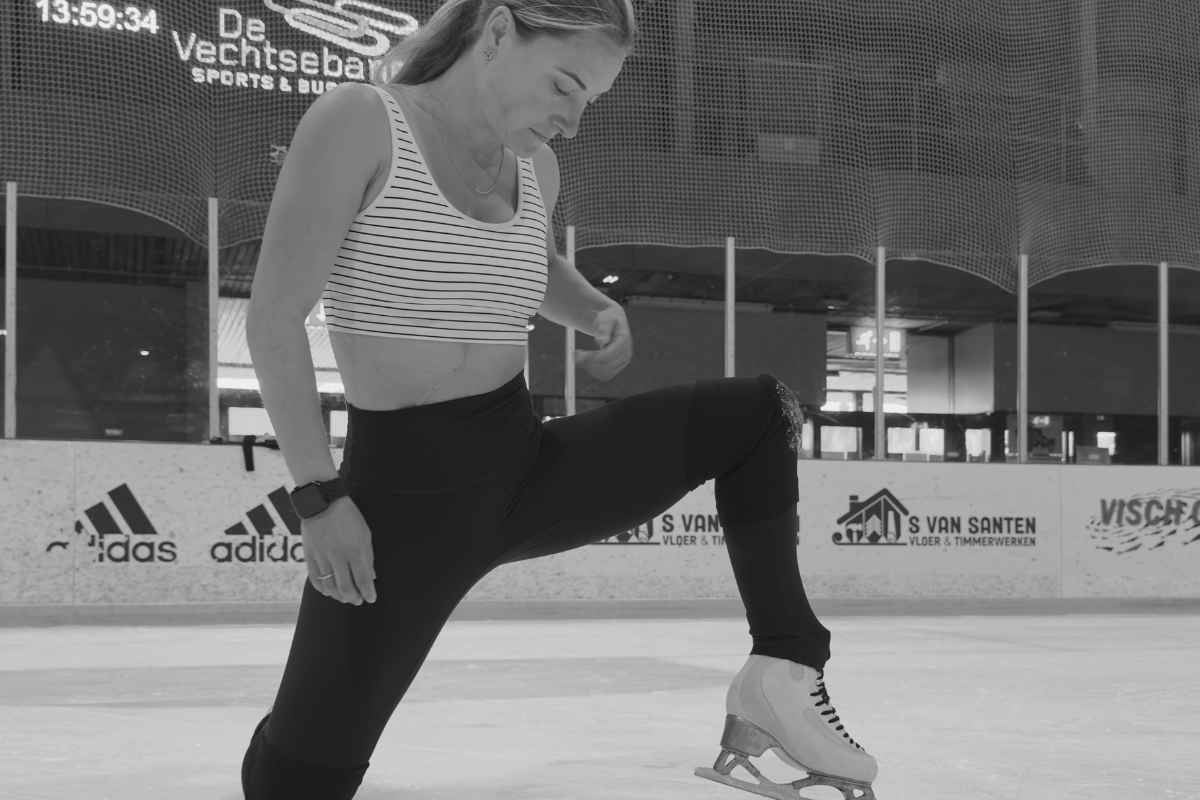
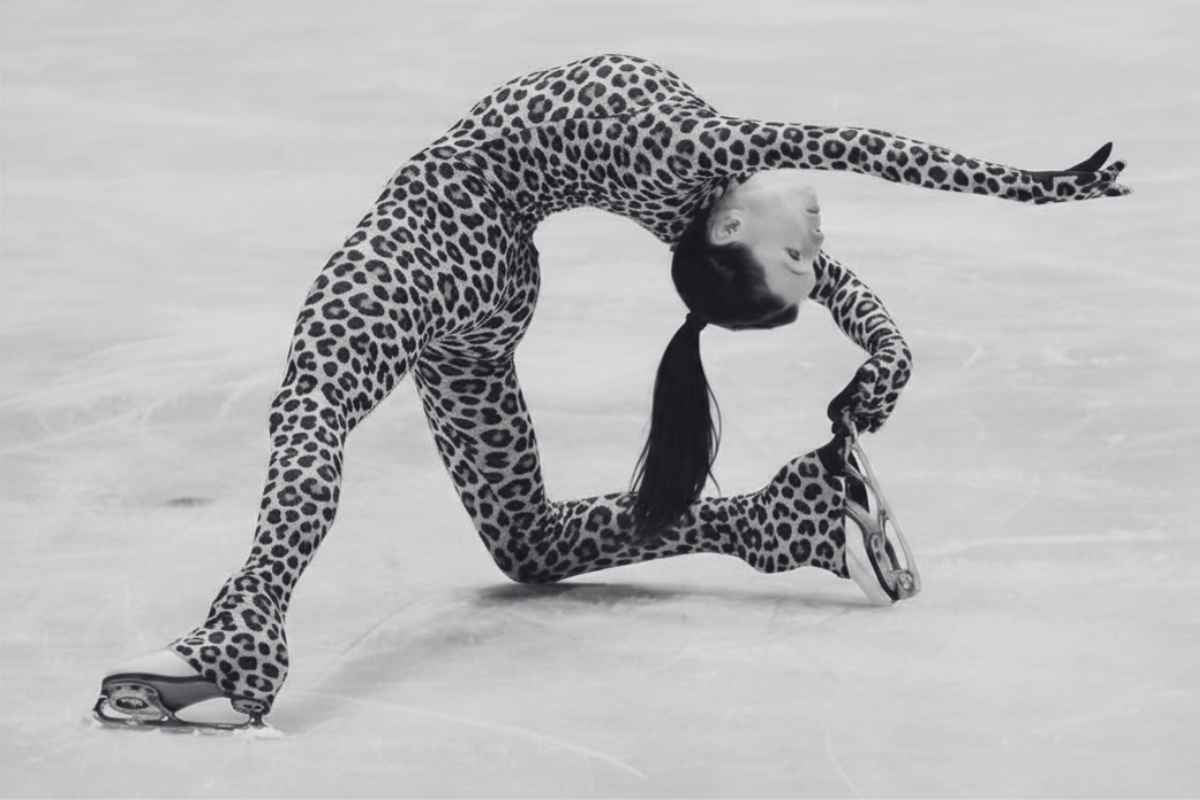
That strategy is exactly why the rulebook itself has been moving fast. Skaters kneel into the ice mid choreography now. They slide across it on a hip or a knee like it's the most natural thing in the world. Some throw in a cartwheel, a handstand, even a backflip, and nobody deducts them for it. None of this is skaters improvising. It's the sport, on purpose, asking for more direct contact with the ice than it ever has before, because that's what makes it exciting to watch.
Two Different Changes, Often Confused for One
It's worth being precise here, because the timelines tell two different stories.
Knee slides and sliding movements have been legal for over a decade. The choreographic sequence, a required element that can include steps, spirals, hydroblading, and sliding movements, was introduced in the 2012 to 2013 season specifically to balance technical difficulty with artistic expression. What's changed recently isn't legality, it's frequency. A move that used to appear occasionally is now close to standard in nearly every competitive program.
Cartwheels, handstands, and backflips are genuinely new. The backflip was banned in 1977, after Terry Kubicka landed one at the 1976 Olympics and judges decided it was too dangerous. For nearly fifty years it stayed on the ISU's list of illegal elements, meaning a skater lost points just for attempting it, even skaters as accomplished as Surya Bonaly, who performed one anyway at the 1998 Games knowing it would cost her. In 2024, the ISU reversed that decision, along with the rule covering cartwheels and handstands, and explained its reasoning plainly in its own meeting agenda: somersault type jumps are very spectacular, and it's no longer logical to treat them as illegal. One ISU technical specialist put it more bluntly to reporters at the 2026 Milan Olympics, where the backflip finally reappeared on Olympic ice for the first time in decades: it's the slam dunk of figure skating. Not more valuable than a clean layup, technically, but crowds love it.
Either way, the direction is the same. More of a skater's body, touching the ice, more often, on purpose.
Skin on Ice Was Never the Plan
Here's the part that doesn't get talked about enough. Ice was never something a body was supposed to slide across.
A knee slide, a hip slide, a hand dragging across the ice during a spin, all of it means real skin, separated from real ice by nothing more than a thin layer of tights, leggings, or fabric. That fabric was designed to look good and move well. It was never designed to be the only thing between skin and a surface that is cold by definition and rarely as smooth as it looks. Ice that's been skated on for even a few minutes develops small ridges and rough patches most people never notice until skin is sliding across them at speed.
This is the actual gap. Boots and blades kept pace with everything the sport started asking of a skater's legs and feet. Nothing kept pace with what the sport started asking of skin making direct, repeated contact with ice.
The Old Idea of Protection Doesn't Fit the New Sport
For a long time, the only real answer to knee protection was thick foam, built to absorb one hard impact, not to survive hundreds of small ones session after session. That's a real limitation of the material itself, not a flaw in any particular pair of pads. Foam works by compressing and absorbing a single big hit, which is a genuinely different job from surviving the sustained, repeated contact that knee slides and low choreography now involve every single session.
That's the actual shift this sport needs to make. Not just accepting that skaters now touch the ice more, but rethinking what they wear when they do it. Protective gear needs a supporting role in training, not just an aesthetic one. It has to move with a deep knee bend, stay in place through a slide, and hold up over an entire season of repeated contact, not just look good under tights.
Nobody Told Skaters This Part
There's a deeper problem sitting underneath the gear gap, and it's cultural, not technical.
Figure skating has a well documented history of normalizing pain. Skaters who track their own injury patterns have described genuinely believing that daily knee and back pain was simply normal, since they could still practice, compete, and perform every required element, and so they didn't count it as a real injury. Research into skaters and their coaches has found the same pattern: pain in the lower extremities is often overlooked by both, not because anyone is being careless, but because the culture treats a high pain tolerance as part of what it takes to be a serious skater.
That instinct isn't toughness, it's a habit the sport built at a time when it didn't ask for nearly as much repeated, sustained ice contact as it does now. Bruising in particular gets treated the most casually of all. A bruise is internal bleeding: small blood vessels under the skin break and leak into surrounding tissue. One bruise heals. Repeated bruising in the same spot, week after week, season after season, is a different story worth taking seriously rather than wearing as a badge of dedication. Medical research on joint trauma is clear that repeated, cumulative impact on a weight bearing joint like the knee raises long term risk in a way a single incident usually doesn't. We go deeper into what's actually happening when a knee bruises from skating here.
Cold gets the same casual treatment, and it shouldn't. More floor contact and more hand to ice moments mean more skin exposed to real cold, repeatedly. Speaking personally, this is something I didn't take seriously enough for years myself. Repeated cold exposure on your hands, especially through gloves that aren't genuinely water resistant, can lead to chilblains: small, itchy, painful patches that develop when blood vessels under the skin constrict from cold, then leak fluid into surrounding tissue as they rewarm. They usually clear up within a couple of weeks, but the affected skin can stay more sensitive to cold afterward, and some people, myself included, notice it flaring up years later at the first real cold snap of the season, long after the training days that caused it.
What Actually Needs to Change
The sport didn't accidentally start asking more of a skater's body. It did it on purpose, to become more exciting to watch, and it's working. But that decision comes with a responsibility the sport hasn't fully caught up to yet: rethinking what skaters wear when they train the way modern programs now require.
This isn't about beginners versus competitive skaters, or kids versus adults. Anyone doing a knee slide, a hip slide, or working floor choreography into a program is asking their skin to do something it was never built to do unprotected. If you're figuring out what to actually look for in protection built for ice, not just cushioning for a fall, this breaks it down.
Taking care of your body isn't a smaller version of skating hard. It's what lets you keep doing this, season after season, without carrying damage nobody ever needed you to accept in the first place.
Sources referenced: ISU Vision 2030 strategic framework (isu.org), ISU Congress 2024 Proposal 236 (isu.org), backflip rule history (Wikipedia, Washington Post, NPR, Slate), choreographic sequence history (Wikipedia, Grokipedia), figure skating injury and pain culture research (International Journal of Athletic Therapy and Training, Frontiers in Sports and Active Living), post-traumatic joint injury research (Penn Medicine, PMC), chilblains mechanism (Cleveland Clinic, Patient.info).